M Henry Jones was a mentor and a true friend to Sam, I & everyone in the PARALLAX-SHIFT Stereo Club. Even though M. Henry had been a staple in the NYC artworld for decades, exploring 3D formats of every variety via Snake Monkey Studio, we only knew him for a short time. He worked completely separate from the 3D clubs and communities I have been aware of since I first discovered community back in 2015, but as soon as I found out about him and his work, I tracked him down like a bloodhound and he and Sam & I became fast friends 🙂
Luckily for us, M. Henry was extremely generous with his time and opened up our world to one of the rarest formats in the realm of stereoscopy- the Integral Image.
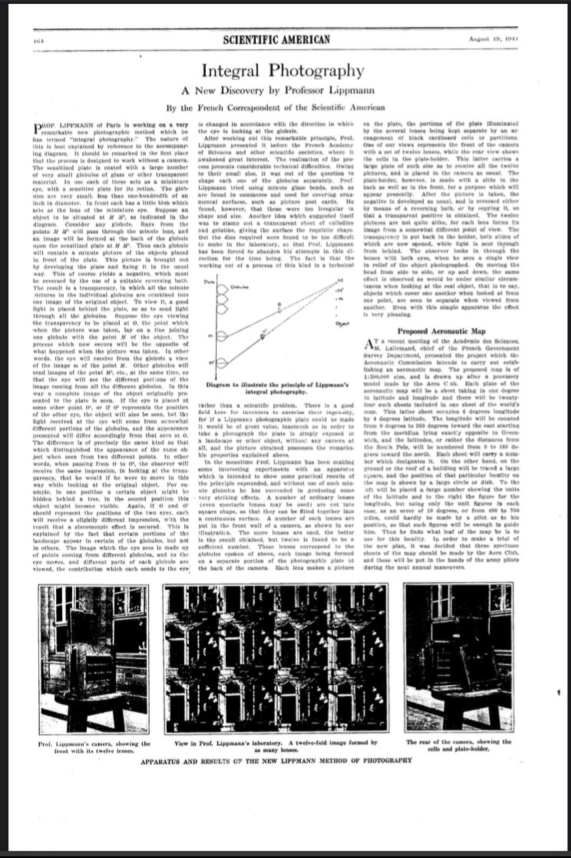
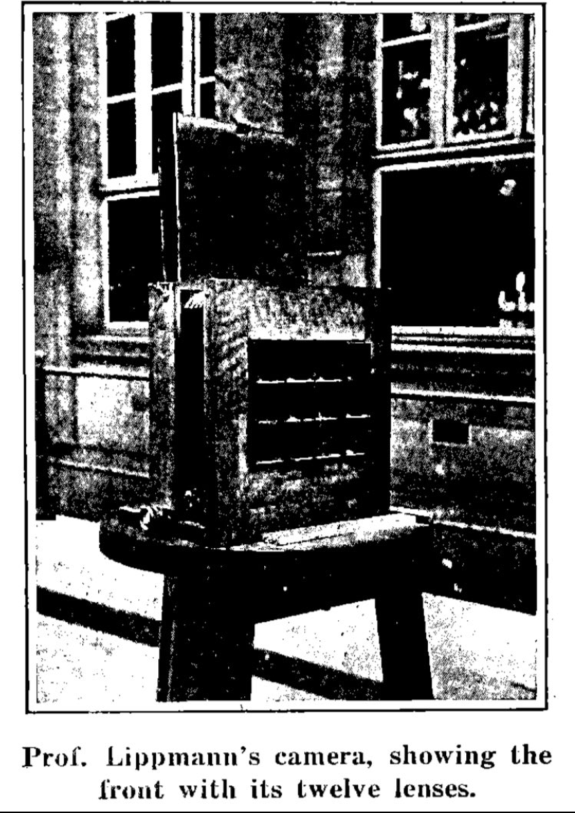
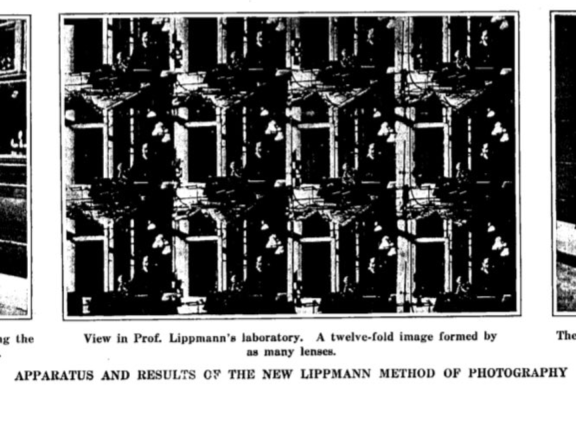
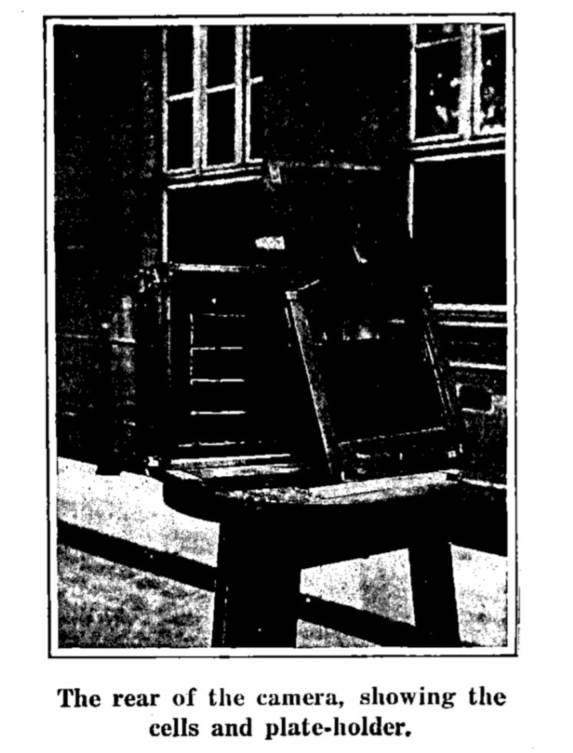
Integral Images are a format imagined by Gabriel Lippmann, the earliest known attribution I am aware of is an article published in Scientific American from Aug 9, 1911.Apparently Gabriel Lippmann’s first integral images were captured in 1908 and that marked the beginning of Integral/Plenoptic/Lightfield imaging.
After that, information on integral imaging becomes very very hazy.
Decades seem to go by before there are any other attempts at this format. References that even metion them are hard to come by. They became the stuff of legend, like MANY of Gabriel Lippmann’s contributions, such as the Lippmann plate, an early attempt at full color photographic imaging that used interference patterns to produce a full color spectrum in a process similar-ish to holography, which were to be viewed through a prism which also apparently produced a 3-Dimensional type of effect.
I have actually never even seen a Lippmann plate in person, although I do keep in contact with one of the only two practitioners of the format I am aware of. One of those persons is Hans Bjelkhagen (whom I don’t know but my friend at Penumbra Foudation speaks with him and I am always impressed to know this). The other person is Nick Brandreth. He makes EXQUISITE Lippmann Plates btw, check some out here
But let’s get back to the integrals and our friend’s role in their making..
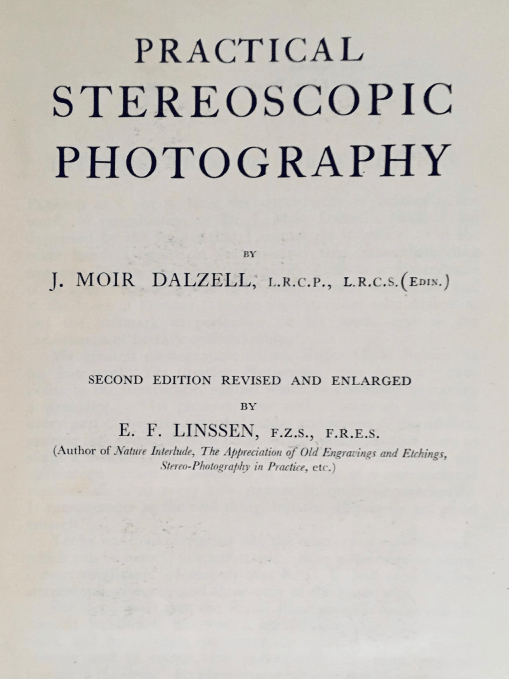
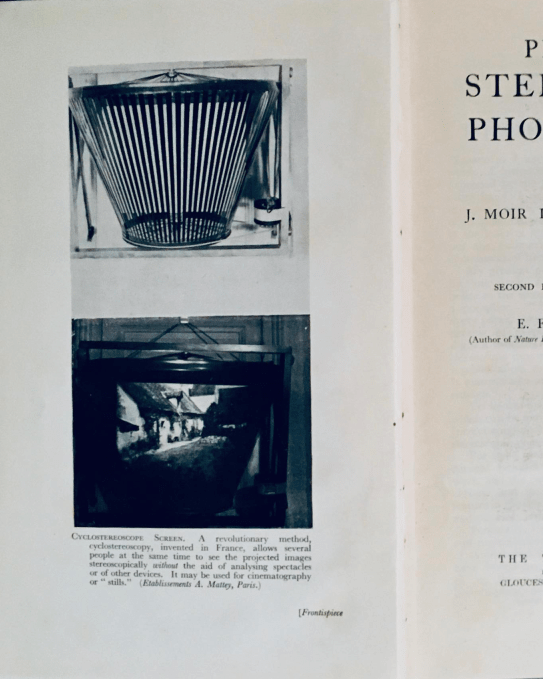
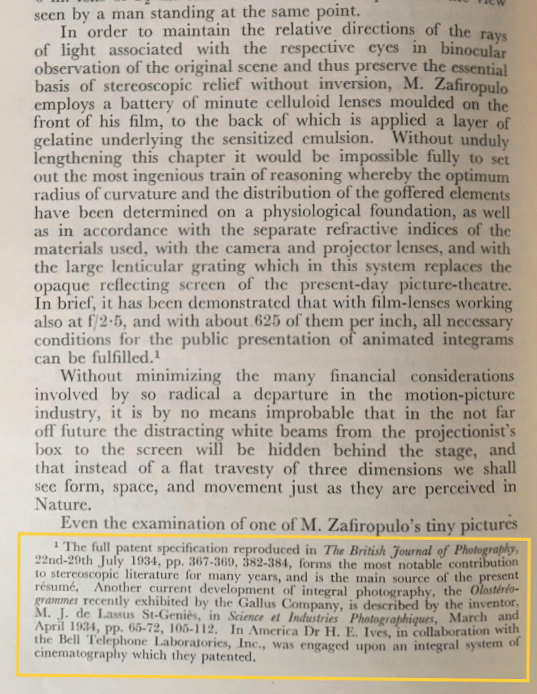
The book above is one of the few references I own that even glazes over their mention, just barely.. There is a autostereoscopic researcher named Walter Funk (best name ever) who’s research includes some of this murky history of integrals, definitely google him if you are interested.
If anyone does have any legitimate references on the subject they can point me to it would be much appreciated 🙂
My larger point is, I knew how important M. Henry was to the history of stereoscopic communication. I tracked him down through his work and from what I have learned, he has had a hand in its practice for much of the known entirety of it’s explorations.
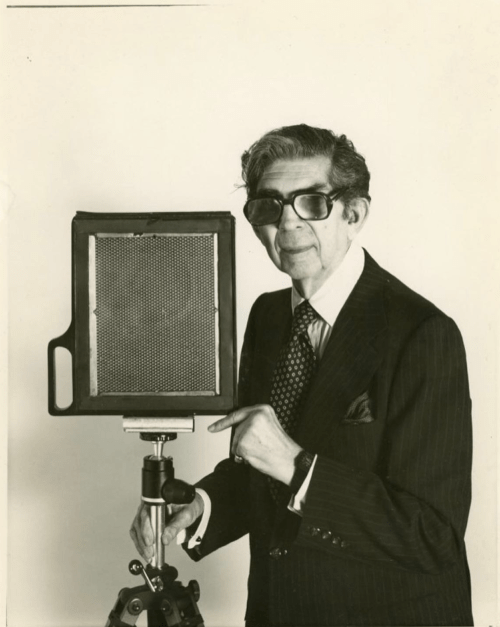

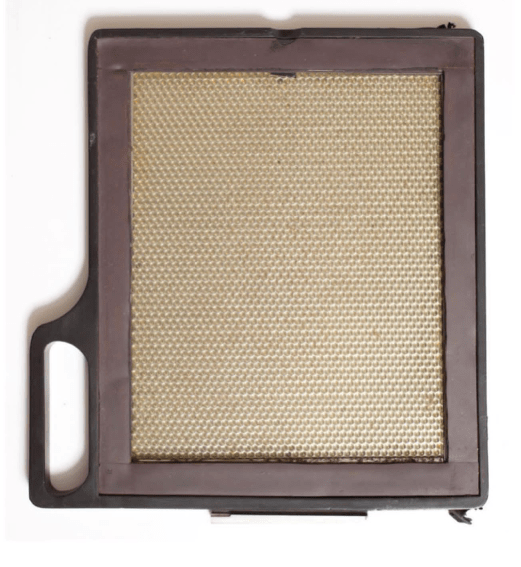
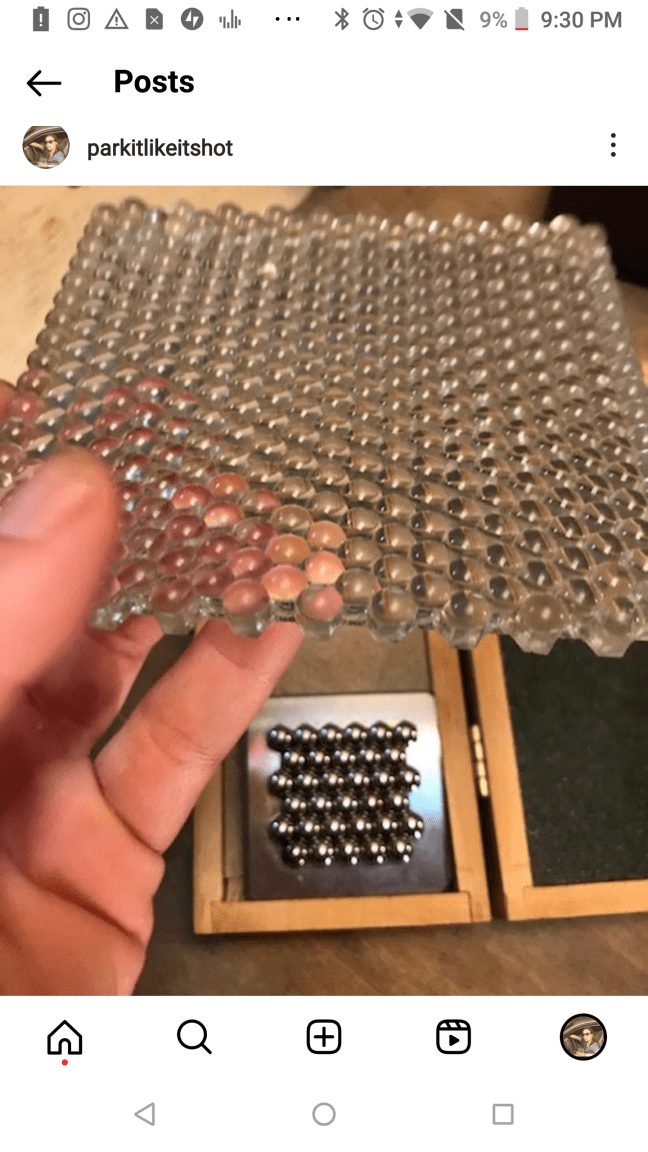
M. Henry worked with Count Roger De Montebello at Integram, he was his right hand man in the 70s-80s, making the Crystal Chrome integral cameras by hand, drilling thousands of pinholes in massive plates of steel, hand pouring all concoctions of acrylic and plastic substrates to manufacture the lens boards needed to view the absolutely amazing and extremely rare 3D images they captured. After Count Roger De Montebello passed away in the early 80s, M.Henry went to carry on his work and developed a patented version he named Fly’s Eye.
Sam and I were lucky enough to be invited over to hang out with him in his very intimate work space- Snake Monkey Studio- quite often. It is where he and his right hand man Daniel and Roberta Bennett would pour over means and methods of improving, altering, experimenting and exploring this format with him, along with COUNTLESS other artisans, craftspeople, engineers and free thinking imaginers..
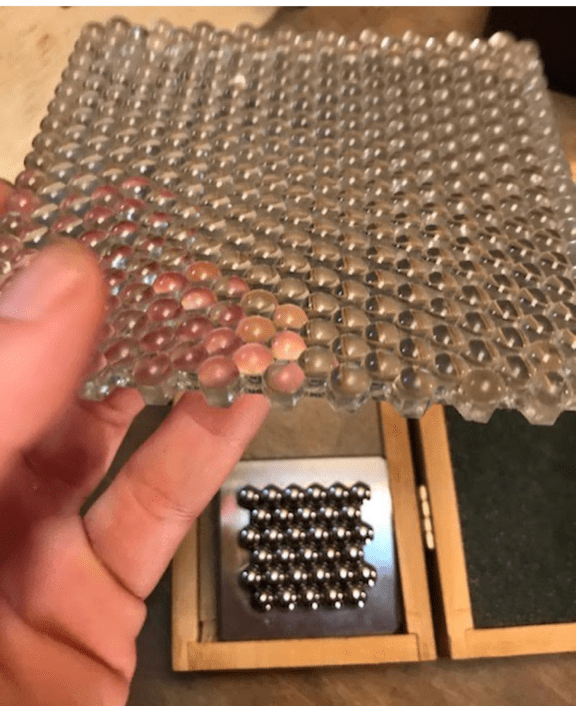
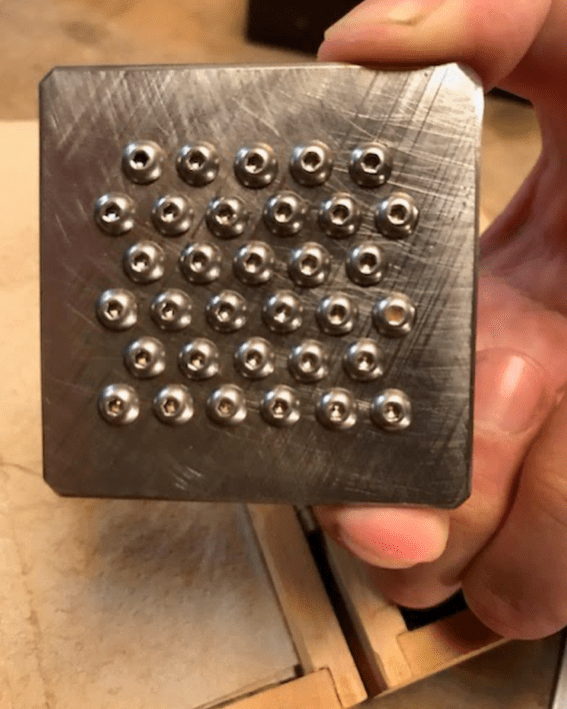
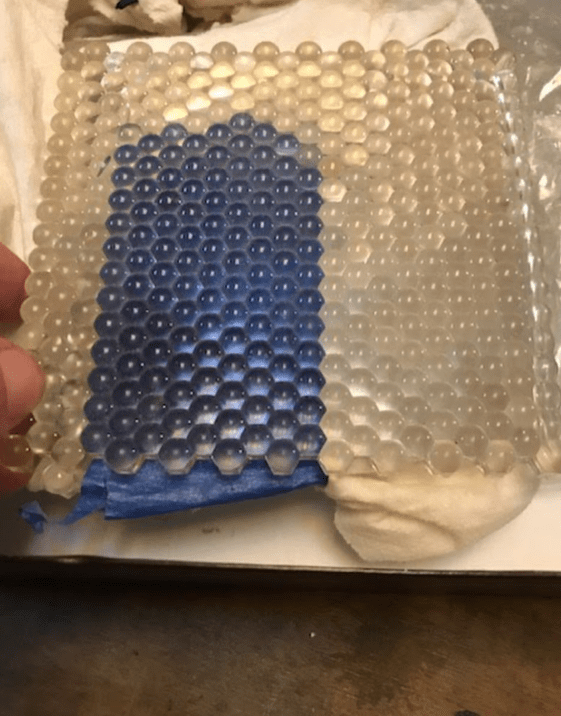
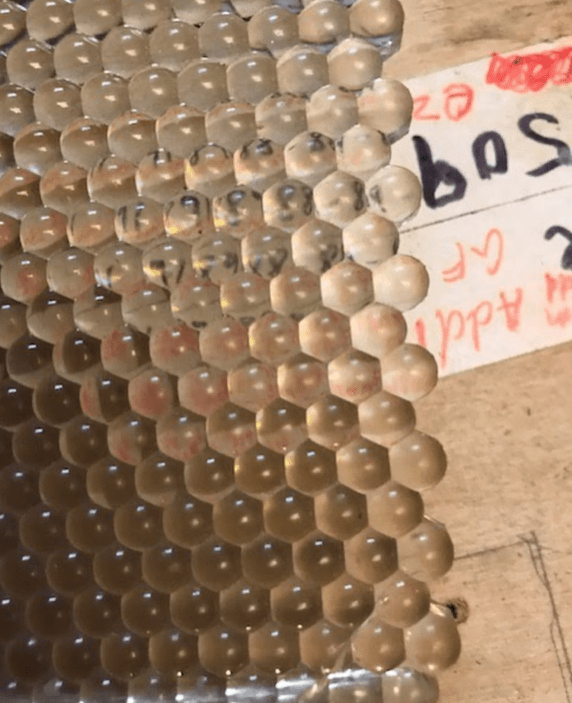
I met most of M.Henry’s devoted lifelong friends and colleagues at his memorial service in the East Village last year. It was 4 1/2 hours long and standing room only. M. Henry did not only have a tremendous impact on the history of 3D communication, he had an impact on practically every single person he met. The entire Lower East Side of NYC came out that night to pay respects and mourn the tremendous loss we all feel in his absence and to celebrate the time we all were given to spend with him.
I will be posting links to that as well soon, it was truly one of the most touching displays of love I’ve ever seen for one person and deserves its own post.
I’m writing this article now just as a quick introduction to M. Henry Jones and his work for those who don’t know and because I’m missing him today. He is a massively important figure in 3D imaging, displays and it’s history. Both he and his work are still rather unknown even to the most verdant of stereo researchers and the 3D format-obsessed. Plus, I will sing his praises as loudly and as often as I like.. he was a true friend and mentor and as a survivor of stereoscopic history and cultural heritage, I feel it’s my great duty to make sure his name and his work will not slip back into the cracks of 3D history where I had to obsessively search for them until I found him;)
The PARALLAX-SHIFT Stereo Club is having a 3D PARTY FOR NERDDDS soon to celebrate International Stereoscopy Day (a day I’m quite certain was inspired by my and Eric Kurlan’s National 3-D Day) and we’ve gotten a little spoiled with having many of our meetings blessed with some iteration or another of an integral image. The knowledge and tradition of their capture and construction are now carried down by the handful of people involved with their creation and who worked closely with M. Henry, they are the true survivers of it and I hope to begin a new project to help survive their first hand knowledge with an oral or video recorded history.
We of course recorded a three part oral history with M. Henry, I’ve linked the videos below
Roberta Bennett is one of the people who survive this first hand knowledge and is a superstar of a club member. She graces our meeting quite often with work that she and M. Henry have made over their lifetimes, she developed the first digital integral camera system with him to capture digital images, I believe she even helped to design and mfg an interaction of Fly’s Eye lens boards, constructed out of fresnels instead of hand poured lens boards with traditional spherical lenses.
Here she is again with yet another iteration- using a Fly’s Eye lens board but is NOT a Fly’s Eye image- this is an early iteration of a NeRF, using a series of 5 or 6 digital images, image mosaicing software and Nvidia software to interpolate a 3-Dimensional viewpoint within this handful of images… As like most formats in stereo communication, there is more then one way to approach a problem and get a stereoscopic solution..
I hope to write more on Integral Imaging soon for our upcoming magazine (perhaps in our second issue 🙂 ) and I hope to start getting in touch with some other of M. Henry’s family, friends and colleagues, to be able to present more of this very endangered history in one of stereoscopy’s most unknown chapters, so it doesn’t slip back into the cracks. Im in NYC my whole life and have been very involved in the 3D and stereo scene here since 2015 and even I did not have any idea that practically the entirety of integral imaging was in my own backyard!
Thank you for reading 🙂 Please reach out if you are interested in helping to preserve this history from slipping through the cracks, rent on M. Henry’s studio is very expensive and I believe his family and friends are trying to turn it into a museum or gallery of his work. M. Henry is actually most known for his film/video work. He was a true pioneer of many disciplines, including stop motion animation and video effects, in addition to his contributions to stereoscopic communication.
–ilicia
 PARALLAX-SHIFT